5 Best AI Tools for SEO Blog Writing (2026 Edition)
Originally published April 2025, updated July 23, 2026

If you’re using AI to blog for your business but still wondering why your content isn’t ranking, this one’s for you.
AI writing tools are everywhere. And while they can churn out content at lightning speed, not all of them are built for SEO results. In 2026, it’s no longer enough for a blog post to just sound good. Your content has to be search-engine smart and aligned with how real users search.
That’s why Emerald’s in-house content writers tested the top AI-powered tools designed for SEO blog writing. But before we jump into tool reviews, let’s get one thing straight: not all AI writing platforms are created equal!
What Makes an AI Tool “SEO-Friendly”?
An AI tool might help you write faster, but an SEO-friendly AI tool helps you rank faster. That distinction matters more than ever in 2026, as competition for organic traffic only gets fiercer and Google’s algorithms get sharper at spotting lazy content marketing.
Additionally, you now have to think about GEO (generative engine optimization), or getting your content cited by AI platforms like ChatGPT, Perplexity, Gemini, and Claude.
With all of this in mind, here’s what to look for if you actually want your AI-written blog post to drive traffic to your website.
Built-In Keyword Intelligence
If a tool can’t help you identify and integrate the right keywords (primary, secondary, and semantic) it’s not built for SEO. The best tools suggest keyword variations, help with clustering, and even prioritize based on search volume and intent.
SERP & Competitor Analysis
An excellent AI SEO tool will show you what’s already ranking and why. Some platforms pull in real-time SERP data, highlight content gaps, and even help you reverse-engineer high-performing blog structures.
Content Brief Generation
Instead of guessing what to include, SEO tools worth their salt offer guided outlines based on top-performing content. These briefs ensure your blog post hits the right word count, headings, questions to answer, and more.
Optimization Recommendations
Once the draft is done, the real magic is in refinement. SEO-focused AI platforms offer readability scores, on-page optimization tips, internal linking suggestions, and content grade scoring based on ranking factors.
Integration with Your Workflow
Bonus points if it plays well with tools you already use, like Google Docs, WordPress, or Surfer SEO. The smoother the workflow, the faster you can go from draft to publish.

5 Best AI Blog Writing Tools for SEO (2026 List)
#1 - Frase – Best All-in-One SEO Writing and Research Assistant
Frase bridges the gap between research, writing, and optimization. It’s like having a content strategist, SEO analyst, and AI writer all in one tidy dashboard. Whether you're starting from scratch or updating an old blog, Frase helps you create SEO-rich content that’s tailored to what’s ranking right now.
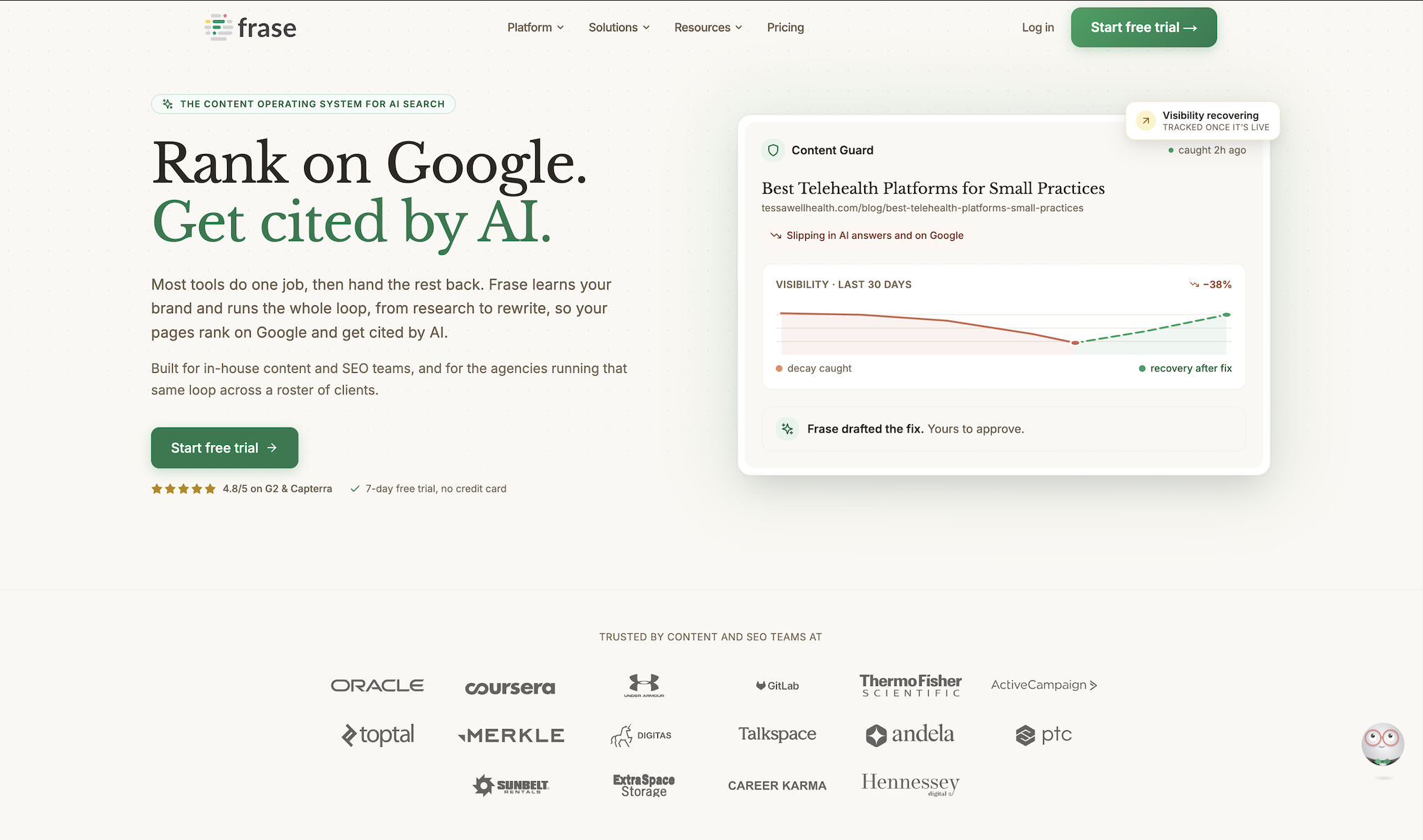
Key SEO Features of Frase:
SERP analyzer pulls headlines, subheadings, and common topics
AI writing assistant for blog drafts, intros, FAQs, and more
On-page optimization score with improvement suggestions
Custom templates and workflows
Integrates with Google Search Console for content audits
Why Frase Stands Out:
Frase is one of the few platforms that lets you research and write in the same place. It’s especially great for writers who want to understand search intent and build topic authority—without bouncing between a dozen browser tabs.
Pros of Frase:
Combines content creation and optimization in one tool
Helpful for content audits and refreshing underperforming pages
Easy to use, even for non-technical marketers
Competitive pricing for solo creators and small teams
Cons of Frase:
AI writing isn’t as advanced as Jasper or ChatGPT
Some keyword suggestions can feel repetitive or generic
Occasional lags with large content briefs
#2 - Jasper AI – Best for Versatile, High-Quality Content Generation
Jasper remains one of the most popular AI writing tools—and for good reason. It’s built on top of OpenAI’s models (currently GPT-4), but it layers in a ton of marketing-friendly functionality that makes it ideal for content teams, solo writers, and agencies alike.
Key SEO Features of Jasper:
SEO mode with keyword input for better optimization
Integration with Surfer SEO for real-time content grading
Pre-built blog post templates that follow SEO best practices
Tone, style, and brand voice customization
Why Jasper Stands Out:
Jasper’s strength lies in its flexibility. You can write long-form blog posts, product descriptions, email sequences, and more—all within a single platform. With SEO templates and content frameworks that are constantly updated, Jasper helps you move fast and stay aligned with search intent.
Pros of Jasper:
Clean, intuitive interface
Works well for both beginners and pros
Great for teams and scaling content operations
Reliable content quality across use cases
Cons of Jasper:
SEO features are more powerful with Surfer integration (extra cost)
Pricier than some alternatives
Doesn’t offer native keyword research, so needs pairing with an SEO tool
#3 - Surfer SEO + ChatGPT – Best for Data-Driven SEO Content Creation
Surfer SEO on its own is a powerhouse for on-page optimization. But when you pair it with ChatGPT? You’ve got an AI writing system that doesn’t just generate text—it generates strategy-backed content designed to rank.
Key SEO Features (via Surfer):
Real-time SERP analysis
Content Editor with NLP-driven guidelines
Keyword density suggestions and LSI term integration
Competitor content audits
Internal linking suggestions
Why This Combo Works:
ChatGPT gives you fast, flexible draft creation. Surfer makes sure it actually performs in search. Together, you can create content that’s tailored to user intent, meets current ranking factors, and gets the SEO science right—without sacrificing readability or brand voice.
Workflow Example:
Use Surfer to build a content brief based on your keyword.
Feed that brief into ChatGPT using a structured prompt.
Review the draft in Surfer’s Content Editor and optimize.
Publish with confidence.
Pros:
SERP-based guidance is incredibly accurate
Affordable if you already use ChatGPT
Strong control over structure and on-page elements
Great for content marketers, SEO pros, and freelancers
Cons:
Requires two separate platforms and a bit of manual setup
ChatGPT won’t automatically follow SEO rules without a clear prompt
No built-in plagiarism checker (yet)
#4 - Content Harmony – Best for Building SEO-Driven Content Briefs at Scale
If you're tired of guessing what Google wants, Content Harmony is your new best friend. This tool isn’t about writing the blog post for you—it’s about setting it up for success before a single word hits the page. It’s built specifically for SEO strategists, agencies, and teams who want to create high-performing content from a research-first perspective.
Key SEO Features of Content Harmony:
Automated content brief generator based on SERP and keyword data
Keyword topic modeling and clustering
Competitive content scoring
Real-time data from Google’s top-ranking pages
Question + People Also Ask insights built in
Why Content Harmony Stands Out:
Where most AI writing tools start with generation, Content Harmony starts with strategy. It tells you what to include, what your competitors missed, and how to position your content to rank. Paired with a writer (human or AI), it’s a powerful system for building content that actually works.
Pros of Content Harmony:
Excellent for topic authority and content mapping
Briefs are detailed, visual, and easy to hand off
Especially valuable for teams or agency workflows
Helps eliminate content fluff and keyword gaps
Cons of Content Harmony:
Doesn’t generate content—it’s for briefing only
Higher price point than some content planning tools
May be overkill for solo bloggers or casual creators
#5 - Scalenut – Best for SEO-Focused Workflows on a Budget
Scalenut is gaining serious traction as a go-to platform for SEO content creation—especially for teams that need structured workflows without breaking the bank. It combines AI writing, content planning, and real-time optimization in one cohesive system.
Key SEO Features of Scalenut:
Cruise Mode: AI blog writer that builds content from title to conclusion
SERP-based content outlines and NLP terms
Keyword planner with clustering and topic authority tools
SEO score with actionable optimization tips
Built-in plagiarism checker
Why Scalenut Stands Out:
Scalenut doesn’t just talk about SEO—it builds it into every step of the process. From keyword research to outline to first draft, every feature is geared toward helping your content rank. It’s a solid pick for marketers, freelancers, and agencies looking for a powerful all-in-one alternative to Jasper + Surfer.
Pros of Scalenut:
Great value for the price
Easy to use with guided content creation
Effective keyword clustering for content strategy
Built-in plagiarism detection and readability scoring
Cons of Scalenut:
AI output can be hit or miss without manual editing
Not as customizable as higher-end tools
Workflow is less flexible for highly creative or complex formats
AI SEO Tool Comparison: Which One’s Right for You?
Still on the fence about which tool to choose? Here’s a side-by-side comparison to help you make the call based on what really matters: features, pricing, SEO muscle, and ease of use.

How to Choose the Right AI SEO Tool for Your Business
With so many powerful platforms out there, the real question isn’t which tool is best?—it’s which tool is best for you? Here’s how to make the right choice based on your goals, workflow, and resources:
Solo Creators & Bloggers
You need a tool that’s fast, affordable, and doesn’t require a steep learning curve. Look for:
All-in-one platforms like Frase or Scalenut
AI writing support with built-in SEO scoring
Simple pricing, no integrations required
Top Picks: Frase, Scalenut
Agencies & Content Teams
You’re producing content at scale and need a system that supports collaboration, briefs, and strategic SEO workflows. Look for:
Customizable briefs and outlines
Workflow-friendly UI with sharing options
Integration with other tools (Docs, CMS, etc.)
Top Picks: Jasper + Surfer, Content Harmony, Scalenut
Technical SEOs & Strategists
You’re not just writing, you’re optimizing for E-E-A-T authority, and long-term rankings. Look for:
Real-time SERP and NLP-driven optimization
Fact-checking and on-page scoring
Audit tools for existing content
Top Picks: Surfer SEO + ChatGPT
Budget-Conscious Marketers
You're balancing performance with cost—and need something that delivers SEO insights without a hefty monthly fee. Look for:
Affordable pricing tiers
High-value features like keyword clustering, SEO scoring
Plagiarism checks included
Top Picks: Scalenut, Frase
Pro Tips for Writing SEO-Rich Blog Content (Even with AI)
AI is a powerful assistant, but it’s not a mind reader, and it’s definitely not an SEO strategist. If you want content that ranks, converts, and builds authority, you still need a human brain steering the ship. Here’s how to get the most from your AI writing tools without letting them run the show:
TIP: Start with a Keyword Cluster, Not Just a Target Phrase
Google’s getting smarter. Ranking for just one keyword won’t cut it. Use tools like Surfer, Scalenut, or your favorite SEO platform to build a keyword cluster that includes:
Primary keyword
Semantic variations
Long-tail questions
Supporting subtopics
Feed these into your brief or prompt to guide your AI’s structure and tone.
TIP: Always Customize the Prompt
A generic “write a blog about X” will get you generic results. Be specific:
Add your audience (e.g., “for small business owners”)
Include the format (e.g., “listicle, 1,200 words”)
Add tone of voice (e.g., “friendly but authoritative”)
Include any call to action or brand message
TIP: Edit Like an Editor, Not a Robot
Even the best AI tools make weird choices. Always:
Trim fluff
Add real data, examples, or anecdotes
Rewrite intros and CTAs for clarity and impact
Check for factual accuracy and natural flow
This is where you inject your voice, and turn good content into great content.
TIP: Optimize the Structure for Skim Readers
Google and your readers both love structure. Format your content with:
Clear H2s and H3s
Bullet points and numbered lists
Short paragraphs (2–4 lines)
Internal links to related blog posts or services
A juicy CTA at the end
TIP: Use Search Console & Analytics to Refine Over Time
SEO is iterative. After publishing:
Check keyword rankings (are you hitting your targets?)
Monitor CTR and bounce rates
Update posts with new insights or keywords after 30–60 days
Your content should evolve the same way your audience and the algorithm do.
Common Pitfalls to Avoid When Using AI for SEO Content
Even the smartest AI tool can’t save you from bad strategy. Here are the most common mistakes that tank performance, and what to do instead.
Over-Optimizing Your Content
Yes, keywords matter. But stuffing them into every sentence? That’s a fast track to the bottom of the SERPs.
Fix it: Use tools with natural language processing (like Surfer or Frase) to balance keyword usage with flow. Aim for semantic richness, not repetition.
Publishing Without Editing
AI doesn’t understand nuance, humor, or the specifics of your brand. And it certainly doesn’t know your audience like you do.
Fix it: Always read and revise. Add your expertise, tighten the copy, and make sure it sounds human.
Ignoring Search Intent
Just because you ranked for a keyword doesn’t mean you’ll stay there. If your post doesn’t match the intent behind the search, Google will drop it.
Fix it: Use SERP analysis tools to understand what kind of content is already ranking (informational, transactional, listicle, how-to) and mirror that format.
Forgetting About E-E-A-T
Google’s ranking system favors content that demonstrates Experience, Expertise, Authoritativeness, and Trustworthiness. AI-generated content without human input usually falls short.
Fix it: Add author bios, cite sources, include expert quotes or lived experience, and build topical authority through supporting content.
Publishing and Praying
Your job isn’t done when you hit "publish." If you’re not tracking, optimizing, and updating your content regularly, you’re leaving traffic on the table.
Fix it: Set a reminder to revisit posts 30–60 days after publishing. Tweak headlines, add internal links, update outdated info, and watch your rankings climb.
Why Human Writers Still Matter More Than Ever
AI writing tools are evolving at lightning speed, but so are search engines, content standards, and audience expectations. In the rush to automate, brands are learning the hard way: AI alone isn’t enough. To compete in 2026 and beyond, you’ll need something that can’t be faked: human voice, perspective, and editorial judgment.
Here’s why the best content is still powered by people:
Smarter AI Means Higher Standards for Originality
Yes, tools like GPT are getting eerily good. But that means your content isn’t just competing with other marketers, it’s competing with every AI-generated post out there. If it sounds generic, vague, or formulaic, it’s already invisible.
Why it matters:
Google rewards depth, not regurgitation
Readers scroll past anything that feels like filler
Original thought and personal insight are now key ranking factors
The fix: You still need a human writer to shape AI output into something worth reading.
Data Alone Doesn’t Build Strategy
AI tools can surface trending keywords, analyze SERPs, and score content in real time—but they can’t decide what’s relevant to your brand or your customer journey. That takes strategy, intuition, and experience.
Why it matters:
SEO is about long-term trust, not short-term clicks
Tools don’t understand context, but writers do
Aligning content to brand messaging requires human judgment
Personalization Requires Perspective
Today’s search landscape is more personalized than ever—especially with AI search engines tailoring results to each user. To stand out, your content needs to feel handcrafted, intentional, and real.
Why it matters:
First-party data needs storytelling, not just stats
Search intent shifts fast, humans can pivot better than prompts
Only a person can bring empathy, nuance, and humor to the page
Rankable Content Requires Editorial Finesse
AI can repurpose, rewrite, and reformat, but it can’t decide what’s worth saying. Strong hooks, emotional resonance, and meaningful structure? That’s human territory!
Why it matters:
Voice, tone, and pacing are what keep readers engaged
AI lacks the instinct for when to go deep or when to be brief
Every brand has a story, but only a writer can tell it well
Regulation Will Require Real Authorship
As AI-generated content becomes more common, so does scrutiny. Search engines, regulators, and readers are all demanding transparency and rewarding content that has a real human behind it.
What’s coming:
Authorship tags will carry weight in rankings
Credibility will depend on real bios, sources, and reviews
Fully AI-written content could eventually be penalized
AI is a brilliant assistant, but it’s not your brand voice, your strategist, or your editor. The future of SEO belongs to content that blends AI speed with human storytelling, insight, and soul.
AI Alone Won’t Rank, But Strategy Will
The truth is, anyone can use AI to write content. But if you want that content to rank, convert, and actually grow your brand? You need more than a tool, you need a system!
That means:
Using the right AI platform for your goals
Pairing it with smart SEO strategy and human editing
Staying consistent with publishing, tracking, and optimizing
The tools we’ve covered in this guide aren’t magic wands—but in the hands of a strategist? They’re rocket fuel.
Ready to Build a Scalable SEO Content System?
We help brands, agencies, and founders like you turn AI-driven content into real search traffic and revenue. Whether you're ready to scale your content production, revamp your SEO strategy, or finally start ranking for keywords that matter…

Emerald Creative Content is an SEO-first, woman-owned, award-winning digital marketing agency based in Columbus, OH!
Book a Free SEO Audit!
We’ll walk you through your current content gaps, show you what’s working (and what’s not), and help you build a game plan that turns blog posts into bottom-line results.